Rope under tension parted on deck
- Safety Flash
- Published on 15 October 2021
- Generated on 27 October 2026
- IMCA SF 28/21
- 2 minute read
A wire rope parted under tension and struck someone’s helmet. There was no injury.
What happened?
The incident occurred during preparation for a shore-side pull of an export cable; the cable lay vessel recovered an onshore winch wire.
The rigging connection failed resulting in the parted rope striking an operator’s helmet.
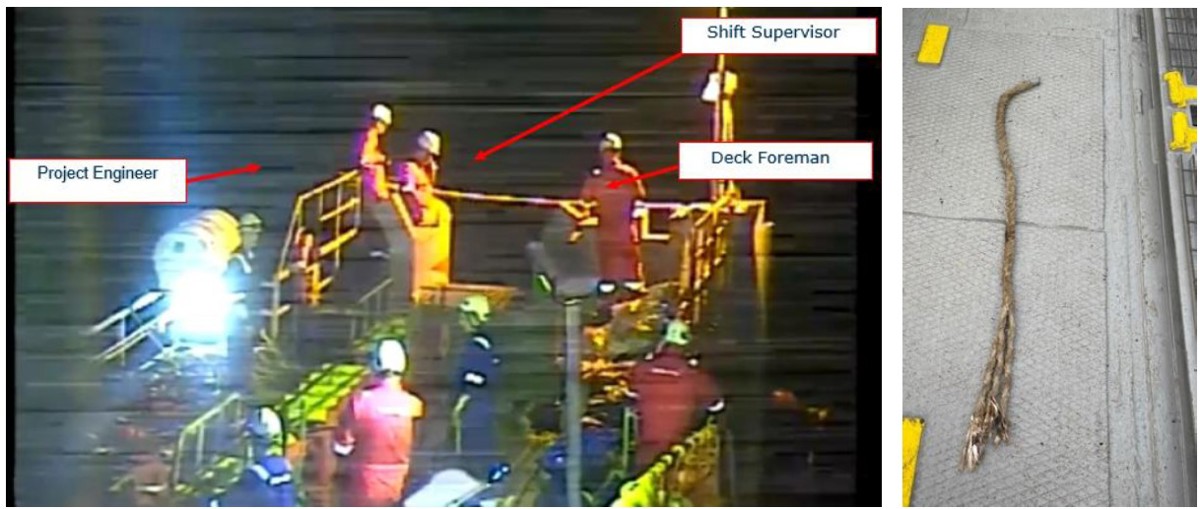
burnt out day room of cabin
The winch wire from the onshore site was connected to the cable lay vessel winch via recovery rigging.
The supporting workboat hauled the onshore wire to make the connection with the cable lay vessel wire. When the connection was confirmed, the Shift Supervisor on the cable lay vessel gave the order to pay in and recover the connected winch wires.
The Shift Supervisor, positioned at the top of the chute platform, noticed a polypropylene rope was attached to the rigging which was not part of the approved rigging arrangement.
The polypropylene rope suddenly came under tension, parted, recoiled and struck the Shift Supervisor’s helmet. The helmet shell separated from the inside webbing. No-one was harmed.
What went wrong?
- Nine persons were on the cable lay vessel deck at the time, all neglecting the ‘Line of Fire’ Life Saving Rule.
- The crew on the workboat did not follow the company approved rigging arrangement.
- There was no supervision on the workboat to ensure the approved procedure was followed.
- There was a language barrier; the workboat crew only had minimal English.
Lessons learned
- Follow the Life-Saving Rules; do not place yourself in the line of fire.
- Ensure better close collaboration between third-party vessels:
- Confirm that procedures have been reviewed by crews.
- Ensure they attend Hazard Identification and Risk Analysis (HIRA) meetings.
- Ensure that they are fully familiar with the task plan on site.
- Confirm that procedures have been reviewed by crews.
- Ensure adequate levels of supervision for the task in hand.
- Where appropriate, ensure bilingual documentation is available for key documents and that a translator is available who is familiar with the task.
Related Safety Flashes
-
IMCA SF 03/21
19 January 2021
-
-
Stored energy near miss: Person nearly hit by equipment caught during light daughtercraft operations
IMCA SF 26/17
20 October 2017
-
-
IMCA SF 17/17
13 July 2017
-
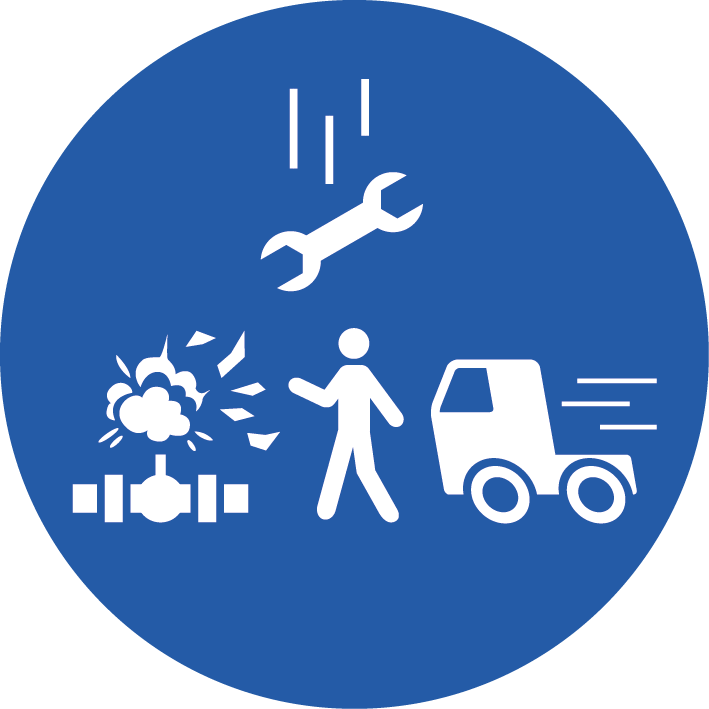
IMCA Safety Flashes summarise key safety matters and incidents, allowing lessons to be more easily learnt for the benefit of the entire offshore industry.
The effectiveness of the IMCA Safety Flash system depends on the industry sharing information and so avoiding repeat incidents. Incidents are classified according to IOGP's Life Saving Rules.
All information is anonymised or sanitised, as appropriate, and warnings for graphic content included where possible.
IMCA makes every effort to ensure both the accuracy and reliability of the information shared, but is not be liable for any guidance and/or recommendation and/or statement herein contained.
The information contained in this document does not fulfil or replace any individual's or Member's legal, regulatory or other duties or obligations in respect of their operations. Individuals and Members remain solely responsible for the safe, lawful and proper conduct of their operations.
Share your safety incidents with IMCA online. Sign-up to receive Safety Flashes straight to your email.