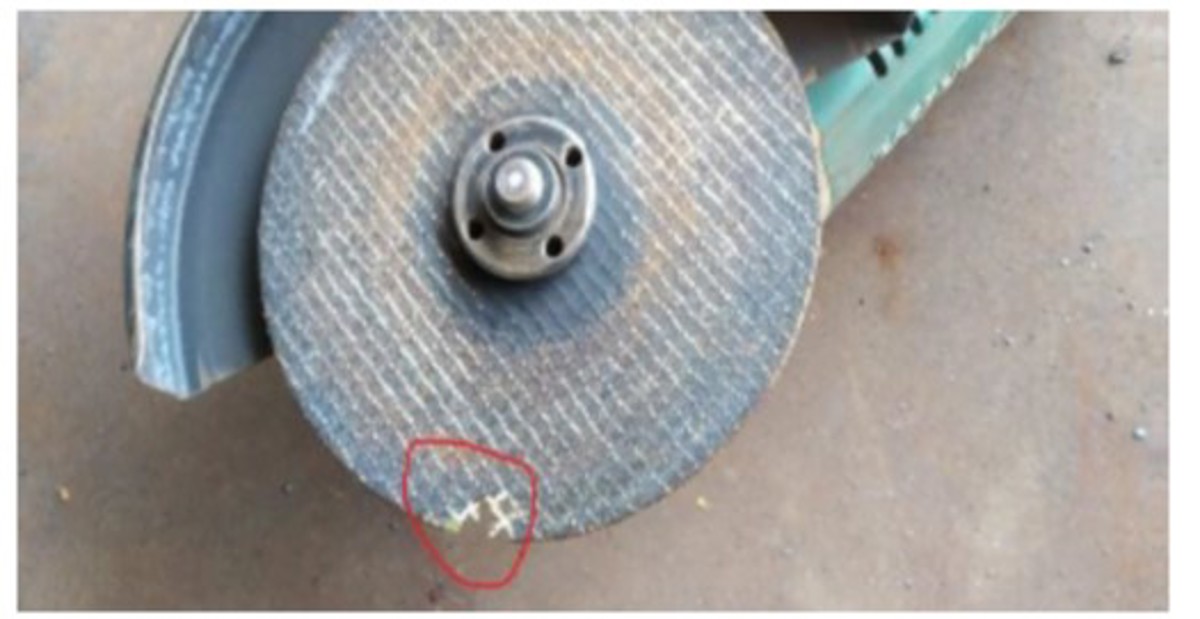
Unsafe use of hand grinder with damaged disc
- Safety Flash
- Published on 25 August 2020
- Generated on 27 October 2026
- IMCA SF 25/20
- 1 minute read
What happened?
Grinding machine was observed as used with damaged grinding disc.
Broken disc projectile could potentially cause serious injuries.
Many other workers have been injured when angle grinders have kicked back, causing cuts and lacerations.
What were the causes? / What went wrong?
- Lack of awareness of hazards associated with use of damaged grinding discs.
- The task specific risk assessment did not cover the associated risks and relevant control measures, such as monitoring of wheel condition by user.
- There was a violation of company SMS requirements relating to the use of electrical tools and equipment.
- Lessons learned from previous similar incidents were not followed, not embedded.
Actions
- Conduct inspection and check condition of all grinders & discs on vessel.
- Ensure damaged discs are thrown out and not re-used.
- Refresher training presentation on abrasive wheels safety for crew.
Members may wish to refer to:
Related Safety Flashes
-
IMCA SF 23/18
2 October 2018
-
-
IMCA SF 28/16
18 October 2016
-
IMCA SF 11/11
27 October 2011
-
IMCA SF 03/05
1 March 2005

IMCA Safety Flashes summarise key safety matters and incidents, allowing lessons to be more easily learnt for the benefit of the entire offshore industry.
The effectiveness of the IMCA Safety Flash system depends on the industry sharing information and so avoiding repeat incidents. Incidents are classified according to IOGP's Life Saving Rules.
All information is anonymised or sanitised, as appropriate, and warnings for graphic content included where possible.
IMCA makes every effort to ensure both the accuracy and reliability of the information shared, but is not be liable for any guidance and/or recommendation and/or statement herein contained.
The information contained in this document does not fulfil or replace any individual's or Member's legal, regulatory or other duties or obligations in respect of their operations. Individuals and Members remain solely responsible for the safe, lawful and proper conduct of their operations.
Share your safety incidents with IMCA online. Sign-up to receive Safety Flashes straight to your email.