Man overboard from stinger
- Safety Flash
- Published on 23 June 2020
- Generated on 21 October 2026
- IMCA SF 19/20
- 2 minute read
What happened?
A member of the crew fell overboard through an opening in the stinger.
The incident occurred with the vessel alongside in port. A team of three electricians were conducting function checks on a new roller box camera on the stinger.
One of the team fell about 2 metres into the water through an opening in the stinger floor grating.
The person remained conscious and was able to swim to a lifebuoy that had been pre-deployed as part of the task.
He was recovered via the quayside ladder and was given first aid treatment for minor scratches on his neck and ear.
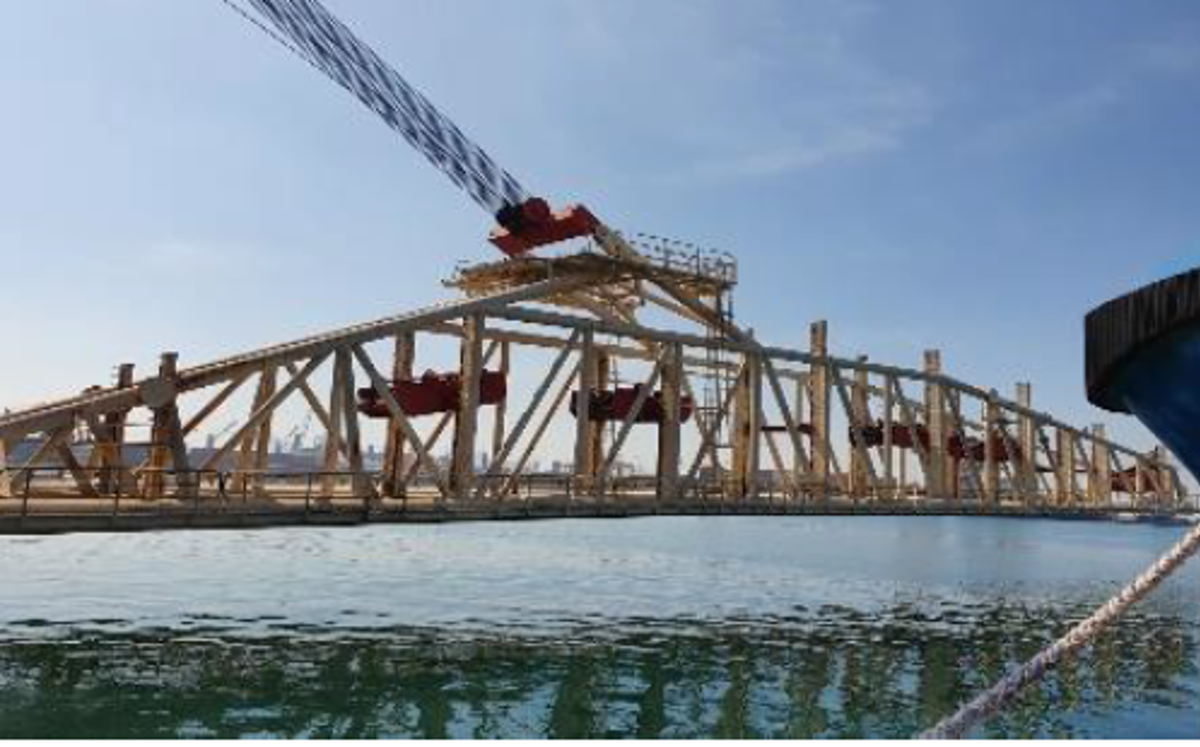
stinger as seen from the quay
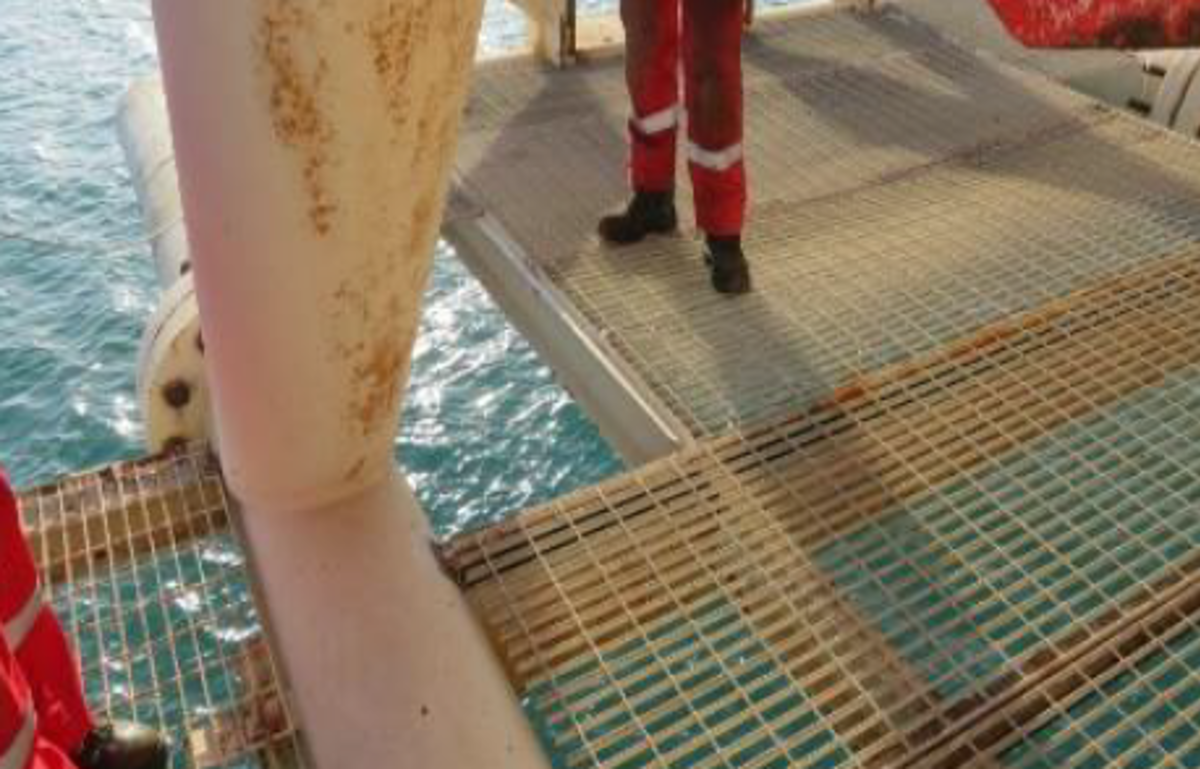
opening through which person fell
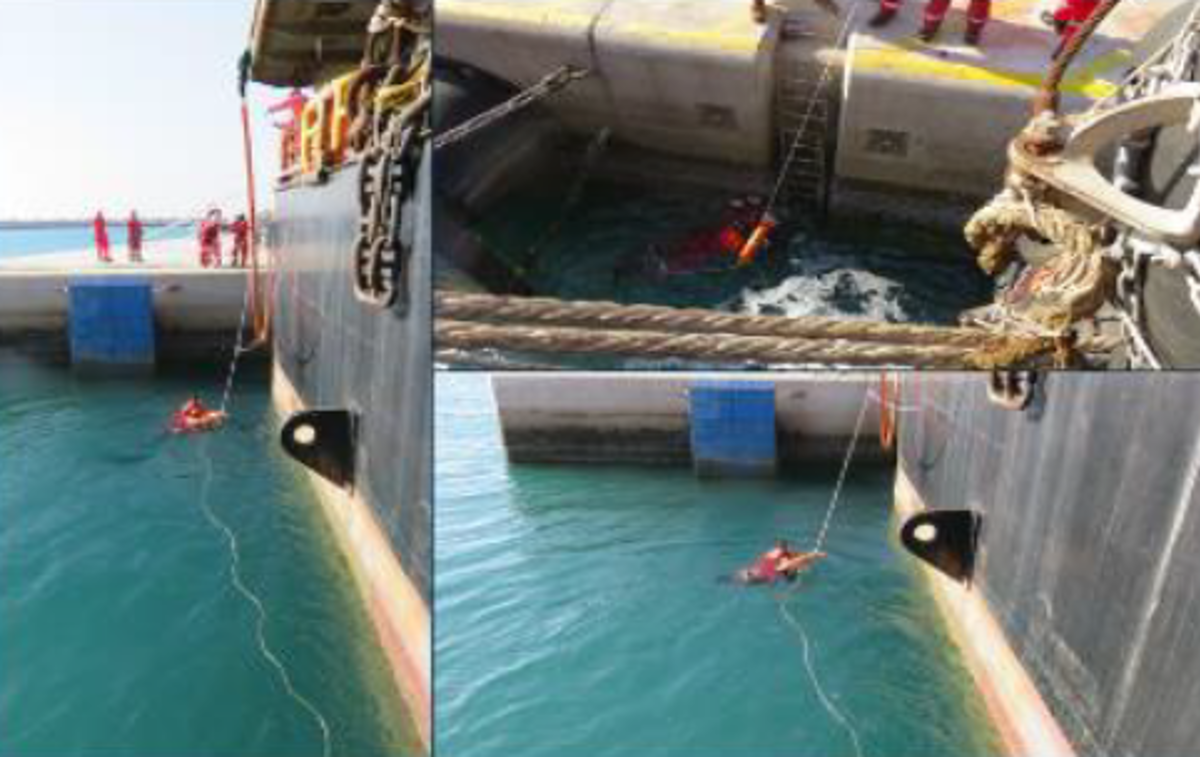
view of the rescue of the person who fell
What were the causes? What went wrong?
- A requirement to move the vessel prevented the work on the stinger being completed on the quayside, which would have removed the fall potential.
- Two weeks before the incident, a management inspection of the stinger had identified damage to handrails and walkway grating including the section from which the fall occurred. Repair was considered low priority because this area was not one that was normally accessed, and remedial work was neither planned nor immediately actioned.
- The controls identified in the risk assessment were not verified by the supervising persons at the site.
- The Permit to Work (PTW) was authorised without review or confirmation of control measures.
- “Task seen as routine”- there was no task-specific Toolbox Talk (TBT) conducted; a ‘pre-shift’ briefing was considered adequate. The persons involved saw the task as “routine and simple”.
- The work team involved in the incident observed unsafe conditions, including openings in walkways and missing handrails, but did not stop the job to re-assess, or apply any Management of Change procedure.
What actions were taken?
- Adequate planning and risk assessment before starting work.
- Appropriate review of work area before start to ensure the specified controls provide safe working conditions.
- Stop work authority should be re-emphasised as an obligation and responsibility for all.
- Specific risk of falling overboard should be considered not only for work over the side but also for work near the side.
Related Safety Flashes
-
IMCA SF 07/16
31 March 2016
-
IMCA SF 02/15
5 February 2015
-
IMCA SF 17/14
31 October 2014
IMCA Safety Flashes summarise key safety matters and incidents, allowing lessons to be more easily learnt for the benefit of the entire offshore industry.
The effectiveness of the IMCA Safety Flash system depends on the industry sharing information and so avoiding repeat incidents. Incidents are classified according to IOGP's Life Saving Rules.
All information is anonymised or sanitised, as appropriate, and warnings for graphic content included where possible.
IMCA makes every effort to ensure both the accuracy and reliability of the information shared, but is not be liable for any guidance and/or recommendation and/or statement herein contained.
The information contained in this document does not fulfil or replace any individual's or Member's legal, regulatory or other duties or obligations in respect of their operations. Individuals and Members remain solely responsible for the safe, lawful and proper conduct of their operations.
Share your safety incidents with IMCA online. Sign-up to receive Safety Flashes straight to your email.