Near miss: Personnel transfer basket hit structure
- Safety Flash
- Published on 21 June 2023
- Generated on 19 October 2026
- IMCA SF 15/23
- 2 minute read
During a transfer of two personnel to a platform using the vessel crane, the base bumper of the personnel transfer basket came into contact with the helipad netting rail of the platform.
What happened?
At the time of the incident, an unexpected wave caused the vessel to roll and resulted in the subsequent vertical movement of the vessel crane tip.
The contact was slight and there were no injuries nor damage to equipment reported - however, it was identified that a more serious incident could have occurred in different circumstances.
What went right?
- A Permit to Work for the personnel transfer had been approved; this included a passenger toolbox talk and a risk assessment for the transfer.
- The sea state was considered within limits for personnel transfer basket operations.
- There were rigging personnel positioned at both departure and landing areas for the operation.
What went wrong?
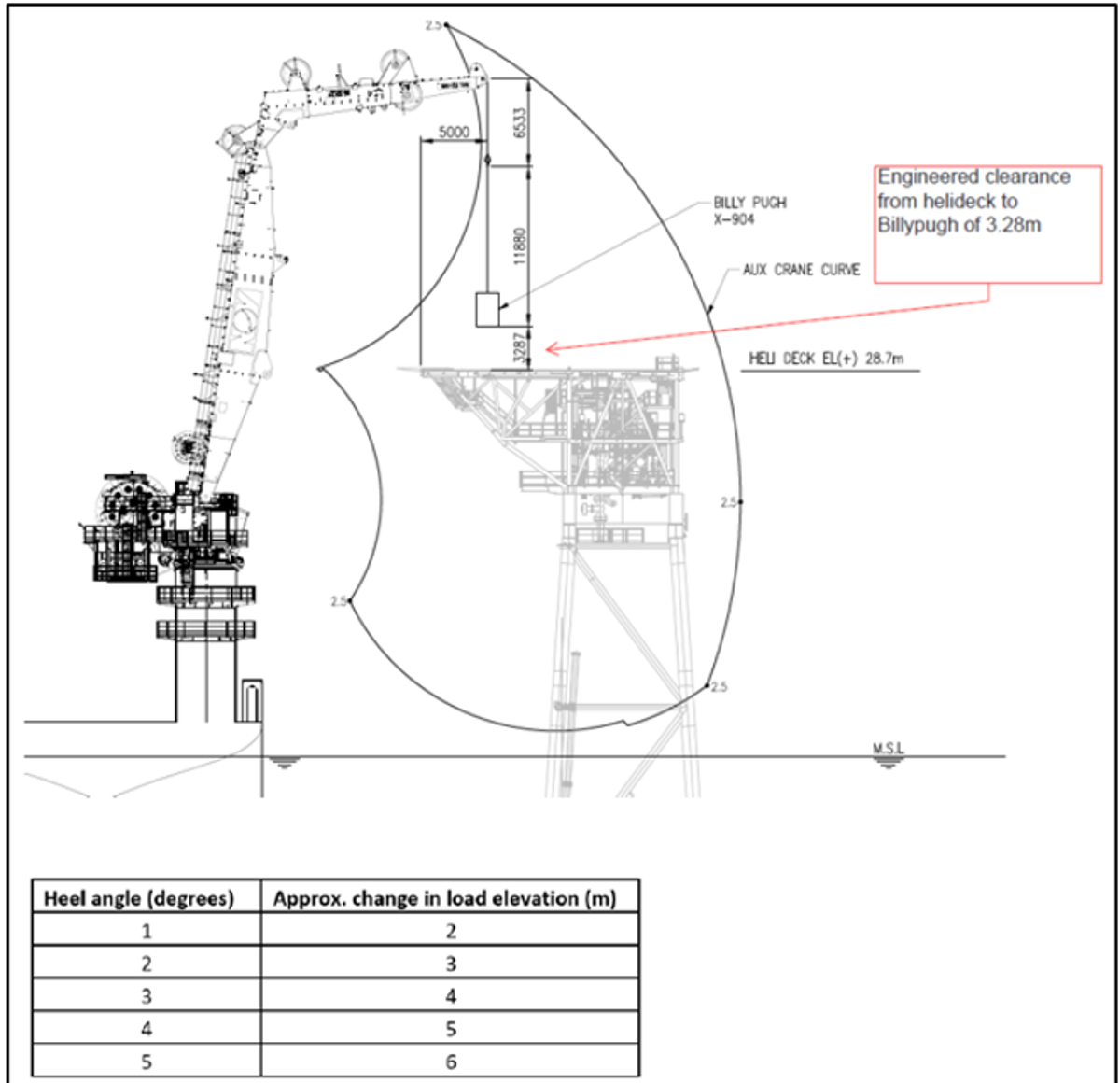
- Detailed planning for personnel transfer operations had failed to recognise the potential – notwithstanding the sea state being within limits for such operations – for vessel roll and subsequent vertical movement of the crane and personnel basket.
- Engineering drawings did not provide vertical movement detail for the personnel basket as affected by environmental conditions.
Root cause
Our member found that the root cause of the incident was insufficient detail in specified working limitations for the vertical movement of the basket when the vessel rolls, and that a minimum safe clearance height above the helideck had not been defined to avoid helideck contact whilst carrying out transfers within the operational limits of the crane.
Actions
Lift plan should include calculated basket vertical movements corresponding to vessel roll for crane operational limits. As per example drawing.
Related safety flashes
-
IMCA SF 04/22
10 February 2022
-
-
IMCA SF 23/21
19 August 2021
-
IMCA SF 26/20
4 September 2020
-
IMCA Safety Flashes summarise key safety matters and incidents, allowing lessons to be more easily learnt for the benefit of the entire offshore industry.
The effectiveness of the IMCA Safety Flash system depends on the industry sharing information and so avoiding repeat incidents. Incidents are classified according to IOGP's Life Saving Rules.
All information is anonymised or sanitised, as appropriate, and warnings for graphic content included where possible.
IMCA makes every effort to ensure both the accuracy and reliability of the information shared, but is not be liable for any guidance and/or recommendation and/or statement herein contained.
The information contained in this document does not fulfil or replace any individual's or Member's legal, regulatory or other duties or obligations in respect of their operations. Individuals and Members remain solely responsible for the safe, lawful and proper conduct of their operations.
Share your safety incidents with IMCA online. Sign-up to receive Safety Flashes straight to your email.