Risk of electrocution during routine work
- Safety Flash
- Published on 9 October 2008
- Generated on 26 October 2026
- IMCA SF 15/08
- 2 minute read
A Member has reported a recent near-miss incident in which a crew member was very nearly electrocuted.
What happened?
The incident occurred onboard a dive support vessel (DSV) following mobilisation, when a sub-contractor’s winch was moved between decks. A sub-contractor technician had been tasked with rerouting the winch power cable (440v 3 phase) which had a plug at the winch end and was hard-wired into the vessel supply at the other end.
It proved impractical to reroute this cable as it had been passed through a small ‘mousehole’ in a sea fastening during mobilisation and the plug was too large to pass through this mousehole. The sub-contractor technicians then attempted to remove the plug in order for the cable to pass through the mousehole. During this process one of the sub-contractor technicians felt a slight shock and realised that the cable was still live. The job was immediately stopped and their supervisor was called. The supervisor immediately asked the project electrician to isolate the supply and make it safe. The individual who received the shock was checked by the medic and had suffered no injuries.
Our member’s investigation revealed the following:
- No toolbox talk had been held before the start of the job.
- No permit to work or electrical isolation was in place.
- No risk assessment had been conducted or put in place.
- Established procedures were not followed.
- The sub-contractor personnel did not receive adequate induction when they started the job.
- The sub-contractor personnel involved were in unfamiliar surroundings and were not fully aware of the potential hazards of 440v mains power.
- There was inadequate active supervision.
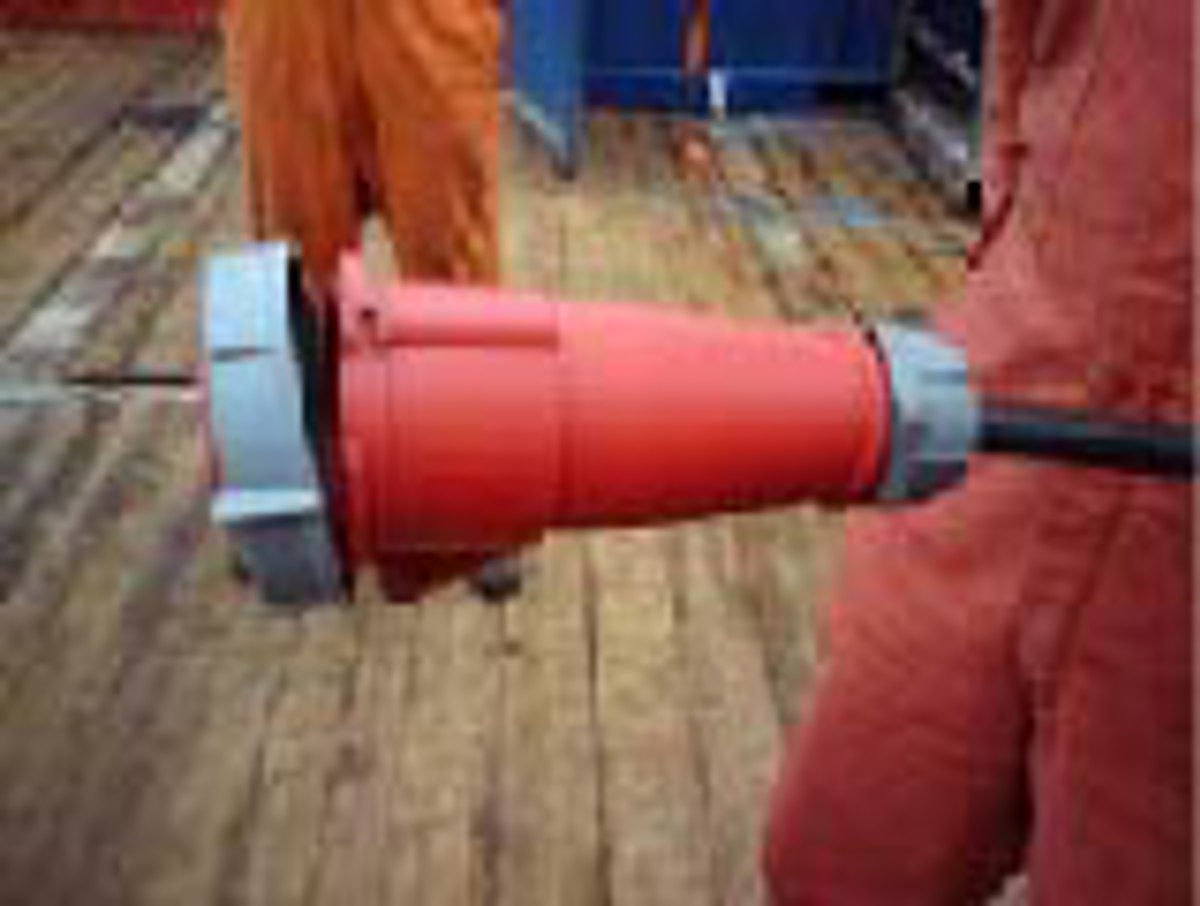
Plug after disassembly
IMCA Safety Flashes summarise key safety matters and incidents, allowing lessons to be more easily learnt for the benefit of the entire offshore industry.
The effectiveness of the IMCA Safety Flash system depends on the industry sharing information and so avoiding repeat incidents. Incidents are classified according to IOGP's Life Saving Rules.
All information is anonymised or sanitised, as appropriate, and warnings for graphic content included where possible.
IMCA makes every effort to ensure both the accuracy and reliability of the information shared, but is not be liable for any guidance and/or recommendation and/or statement herein contained.
The information contained in this document does not fulfil or replace any individual's or Member's legal, regulatory or other duties or obligations in respect of their operations. Individuals and Members remain solely responsible for the safe, lawful and proper conduct of their operations.
Share your safety incidents with IMCA online. Sign-up to receive Safety Flashes straight to your email.