Damage to rescue boat during lowering
- Safety Flash
- Published on 12 May 2017
- Generated on 14 October 2026
- IMCA SF 10/17
- 2 minute read
A member has reported an incident in which a rescue boat (FRC) was damaged as a result of it being lowered in its davit during a scheduled drill.
What happened?
During the process of being swung out, the FRC experienced a load imbalance causing it to list heavily on its starboard side.
This resulted in the starboard load bearing rod being dislodged from the boat foundation, which in turn meant that the boat could not be lifted back up using its single arm davit.
No personnel were in the boat so there were no injuries – but the FRC was damaged.
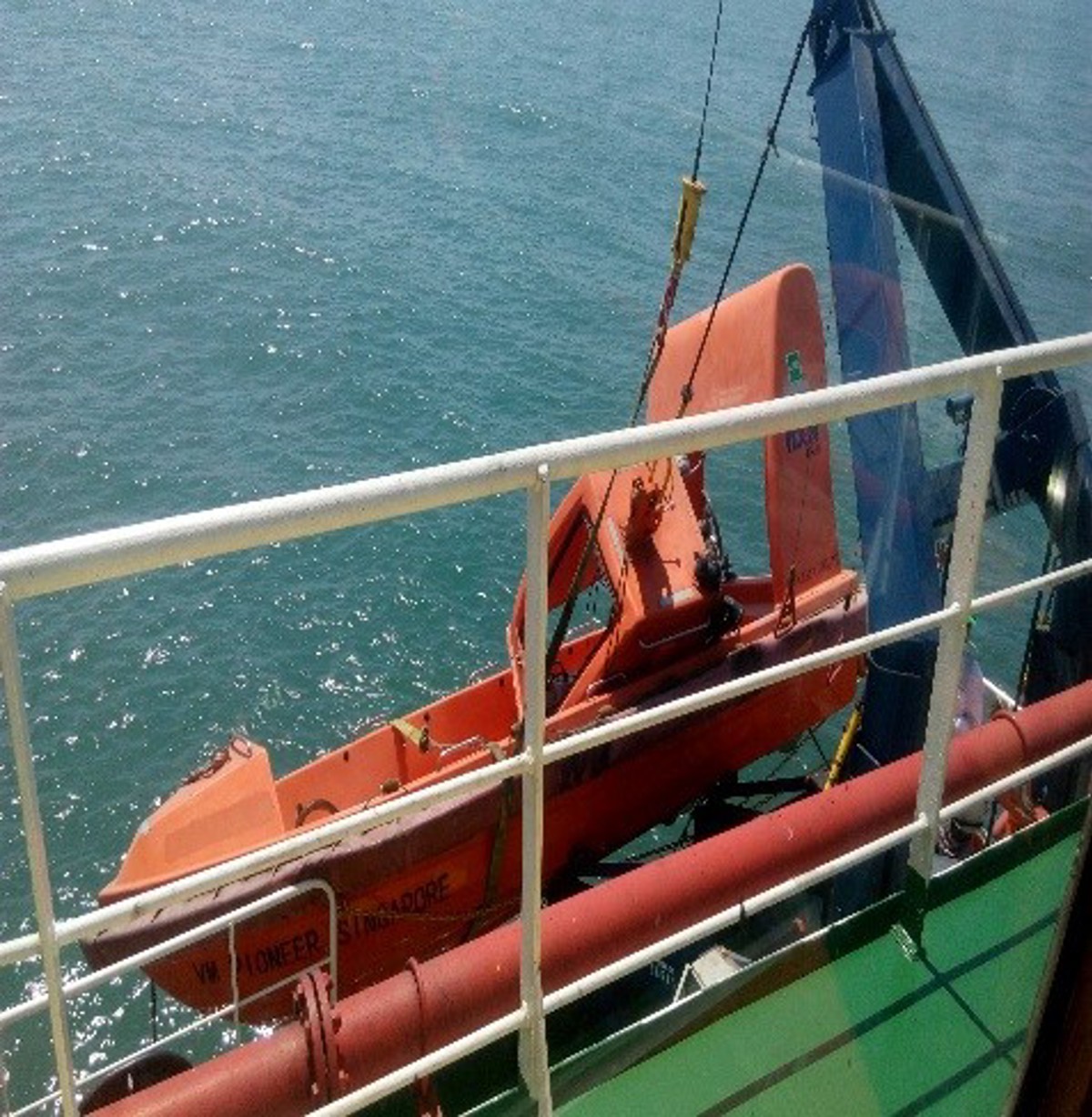
FRC listed to starboard, showing canopy parted
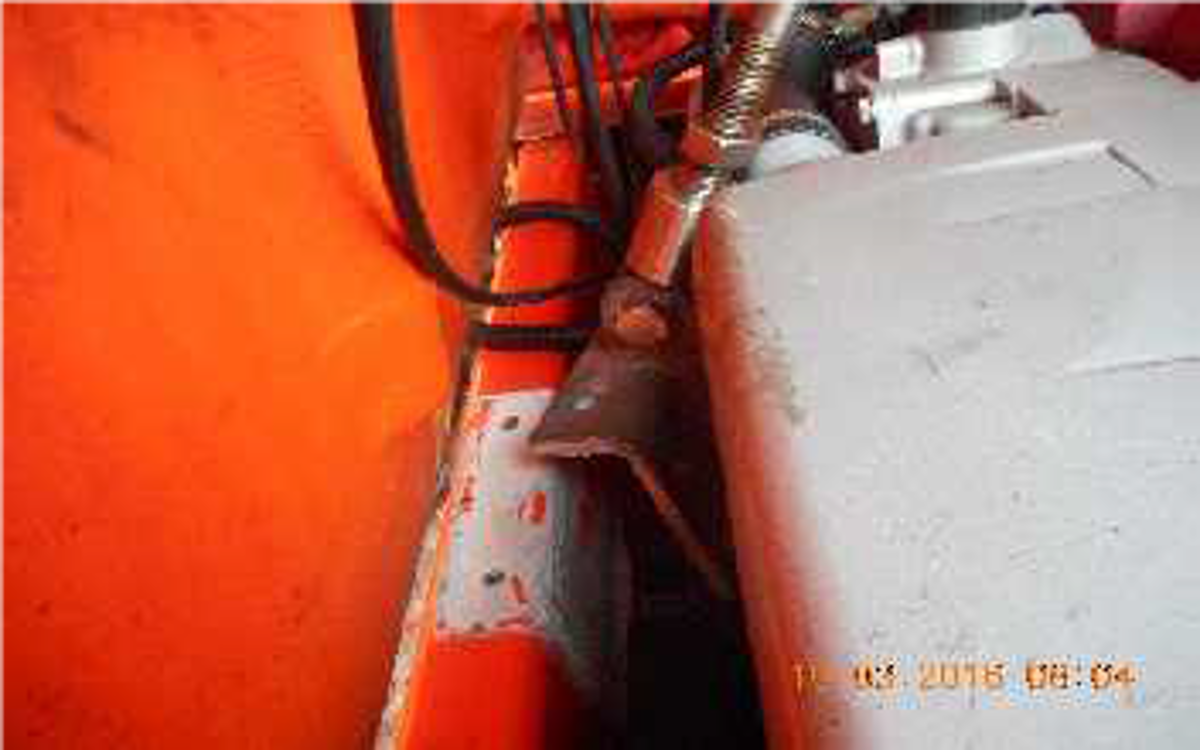
showing failed starboard load bearing member
Findings
Our members’ investigation revealed that:
- Following the Master's instructions, crew proceeded to lower the boat up to water level.
- The boat was swung out on the davit without removing the shipside securing chain before launching.
- The crew continued to hoist the boat with the help of motor; the boat started tilting to port side, until the whole load of the boat came onto the starboard side supporting rod.
- Structural integrity of the boat: Pictures taken during drill reveal that the engine door was not in place on the canopy before lowering. It is important to ensure the structural integrity of the boat before launch.
- Due to more load on the base of the starboard side supporting rod, the boat top canopy sheared off from the foundation. At that point, the Master suspended the operation.
Lessons learned
The following lessons were learned:
- More effective command and control should be exercised by vessel management during small boat operations, particularly launch and recovery.
- Careful checks should be carried out by designated personnel before lowering the boat, to ensure that everything is properly prepared and ready.
- The vessel management and crew resourcefully managed to recover the damaged boat using the provisions crane, but there was no proper Management of Change (MoC) procedure initiated, leading to the potential for a second, possibly more serious incident.
- Thorough review to take place of company procedures and training for small boat operations, including preparation of video and photographic training material.
Related safety flashes
-
IMCA SF 09/12
4 September 2012
-
IMCA SF 10/11
16 September 2011
IMCA Safety Flashes summarise key safety matters and incidents, allowing lessons to be more easily learnt for the benefit of the entire offshore industry.
The effectiveness of the IMCA Safety Flash system depends on the industry sharing information and so avoiding repeat incidents. Incidents are classified according to IOGP's Life Saving Rules.
All information is anonymised or sanitised, as appropriate, and warnings for graphic content included where possible.
IMCA makes every effort to ensure both the accuracy and reliability of the information shared, but is not be liable for any guidance and/or recommendation and/or statement herein contained.
The information contained in this document does not fulfil or replace any individual's or Member's legal, regulatory or other duties or obligations in respect of their operations. Individuals and Members remain solely responsible for the safe, lawful and proper conduct of their operations.
Share your safety incidents with IMCA online. Sign-up to receive Safety Flashes straight to your email.