Fire in the deep fat fryer
- Safety Flash
- Published on 21 March 2017
- Generated on 30 May 2026
- IMCA SF 06/17
- 3 minute read
A member has reported an incident in which there was a fire in a deep fat fryer.
What happened?
The galley crew were finished in the galley and went for a break at 12:55. At 13:02 the fire alarm sounded, indicating a fire in the galley.
Crew mustered and power was switched off to the galley. Fire teams were prepared.
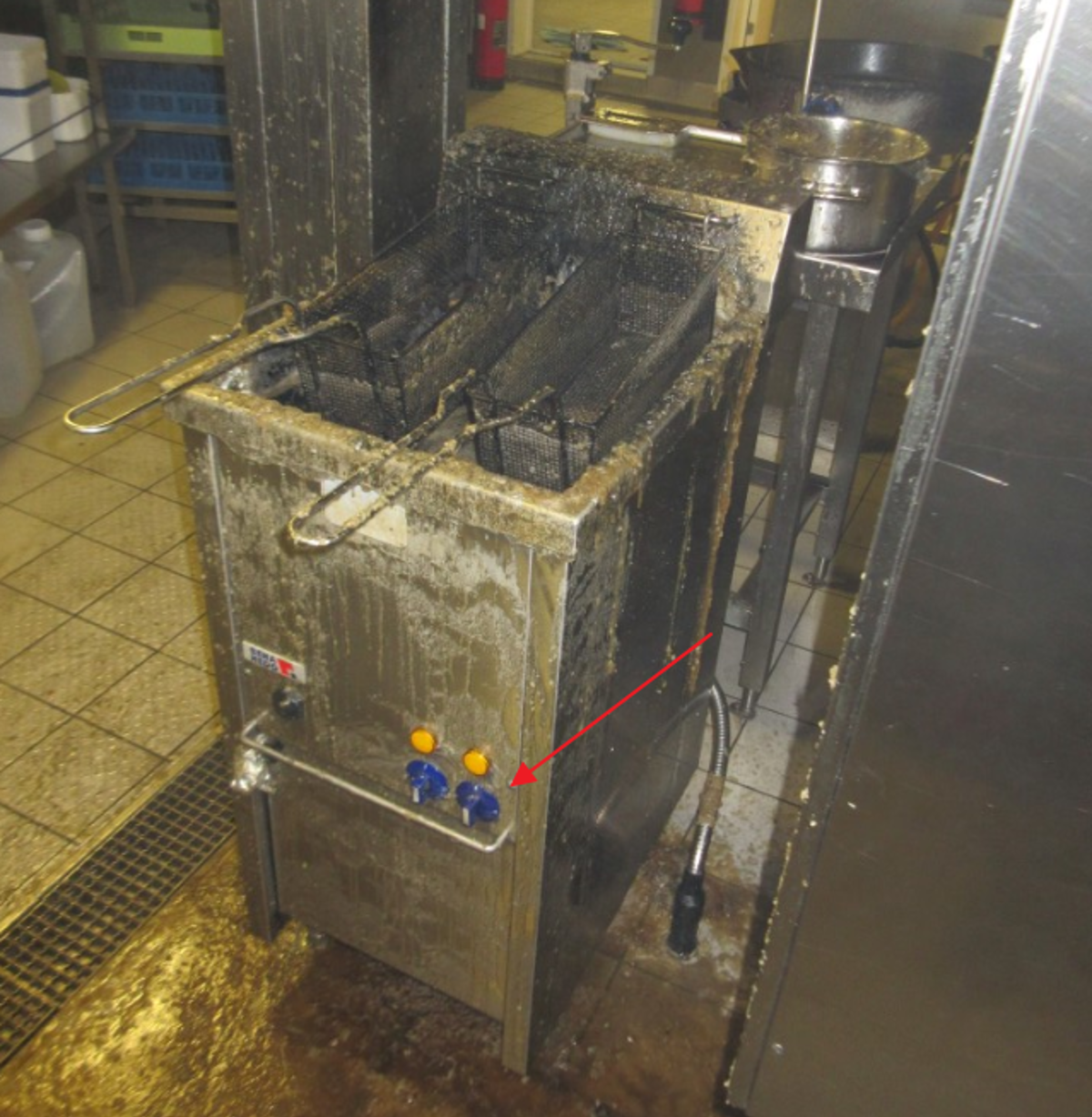
On entry into the galley it was discovered that the deep fat fryer was the cause of the fire, and that the automatic fire prevention system over the deep fat fryer had extinguished the blaze. There were no injuries.
Some smoke got into the accommodation spaces but was ventilated out.
Findings
Our Member’s investigation noted the following:
- The galley crew said that the deep fat fryer was turned off 10 minutes before they left the galley.
- The deep fat fryer had a thermostat with maximum 210 °C, and thermal fuses which should have cut out, with an alarm sounding, at 246 °C and 275 °C. These two thermal fuses had not cut out.
- No fault was found with the thermostat after the fire. It could not be said with certainty that the thermostat was without fault – an intermittent fault could have been present.
- The oil used in the deep fat fryer had a flash point of ~250 °C, but the user manual for the device requires that the oil used should have a flash point higher than 350 °C.
- The most likely cause of the fire was the high oil temperature.
- The deep fat fryer was left in an unsafe condition.
- The two baskets were not removed.
- The lid was not in use.
- The heating element was not clean, and the thermostat is under the heating element. Therefore, the thermostat could have been reading an incorrect temperature:
- Two days before the incident, the deep fat fryer had been inspected and repaired, but no work order or record was made of the corrective work or repair.
What caused the fire?
Our member’s investigation recorded the following direct causes:
- Incorrect use of equipment/machinery
- The flash point of the oil used was too low.
- The deep fat fryer was left in an unsafe condition.
- Inadequate tools and equipment: the thermostat may have had an intermittent fault.
- The flash point of the oil used was too low.
Our member’s investigation recorded the following root causes:
- Lack of knowledge and lack of experience of what kind of oil should have been used in the deep fat fryer.
- Inadequate maintenance standards: No proper records were kept after repair work was conducted on the fryer.
- Lack of skill/poor practice: The galley crew ought not have left the fryer in that condition.
- Inadequate work standards: Procedures were not adequate for the correct use and cleaning of the fryer.
Actions
The deep fat fryer was taken out of use and an investigation begun. The actions taken included:
- Ensure oil with the correct flash point is used in all such fryers on all company vessels.
- Ensure that all repair work is properly documented in company planned maintenance system.
- Make sure focus/attention is given to ensuring galley equipment is left in safe and appropriate condition after use, and that there are proper procedures for cleaning the fryer.
Related safety flashes
-
IMCA SF 07/11
19 July 2011
IMCA Safety Flashes summarise key safety matters and incidents, allowing lessons to be more easily learnt for the benefit of the entire offshore industry.
The effectiveness of the IMCA Safety Flash system depends on the industry sharing information and so avoiding repeat incidents. Incidents are classified according to IOGP's Life Saving Rules.
All information is anonymised or sanitised, as appropriate, and warnings for graphic content included where possible.
IMCA makes every effort to ensure both the accuracy and reliability of the information shared, but is not be liable for any guidance and/or recommendation and/or statement herein contained.
The information contained in this document does not fulfil or replace any individual's or Member's legal, regulatory or other duties or obligations in respect of their operations. Individuals and Members remain solely responsible for the safe, lawful and proper conduct of their operations.
Share your safety incidents with IMCA online. Sign-up to receive Safety Flashes straight to your email.