Near-miss: Strong sun glare contributes to heavy impact on boat landing
- Safety Flash
- Published on 16 April 2014
- Generated on 20 October 2026
- IMCA SF 06/14
- 2 minute read
A member reported an incident in which a CTV (crew transfer vessel) made a heavy impact on a boat landing on an offshore renewable energy turbine tower.
What happened?
The weather conditions were 1-1.5m significant wave height, wind on the beam of the vessel and a flood tide. On this occasion the sun was low in the sky almost directly behind the turbine tower and was causing significant glare on the water. Although sunshades were in place and adjusted, the Master found it difficult to judge the final approach and landed on the boat landing in excess of the threshold limit of 200 KN. There was no damage to the vessel or injury to crew.
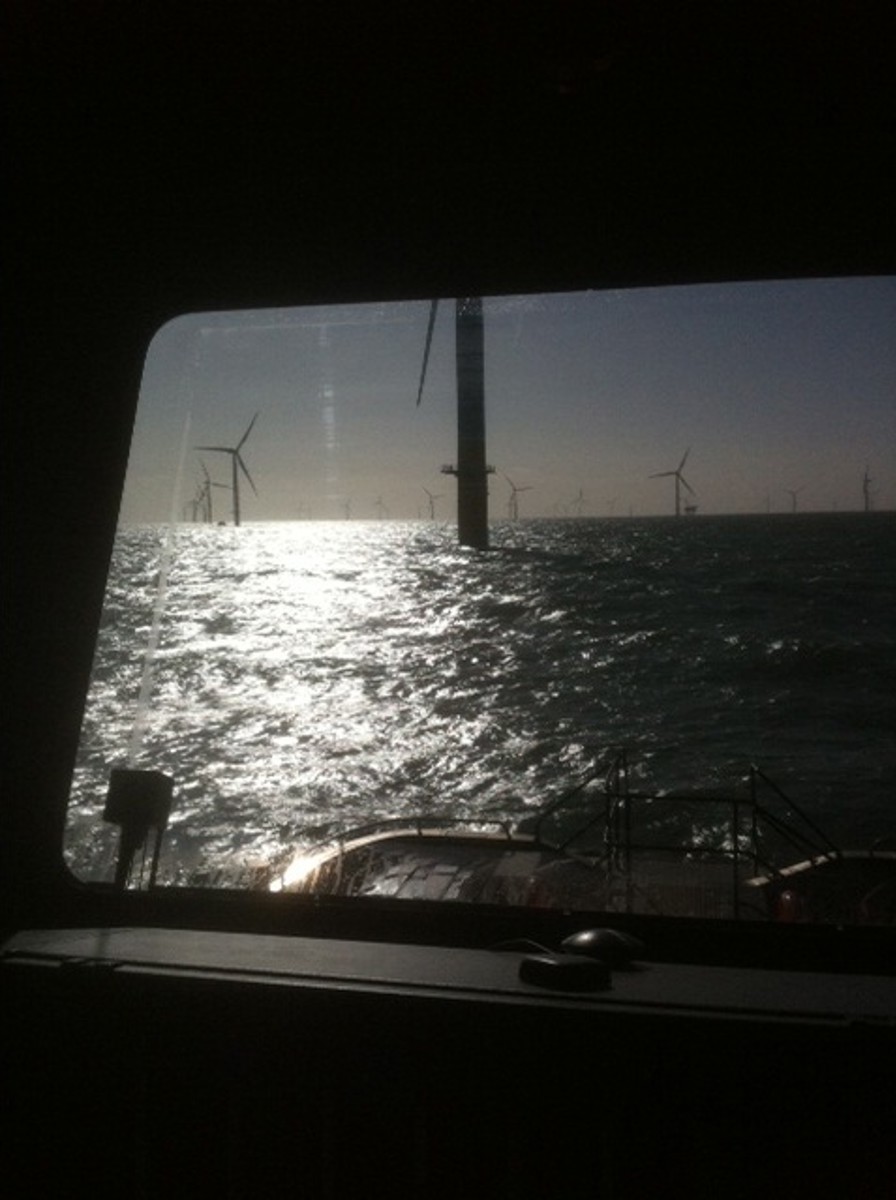
View as seen by vessel Master shortly before incident
The investigation revealed the following:
- The heavy impact was recorded by the ‘vessel black box’ monitoring equipment.
- Whilst the conditions made manoeuvring the CTV challenging, more than 30 landings had already been made without incident.
- The glare made it difficult to judge the distance in final approach.
- The approach could have been delayed to allow for the glare to reduce.
Our member took the following corrective actions:
- Revision of generic risk assessment for navigation along with procedures for small vessel operations.
- Reminded vessel Masters to take into account all elements of visibility and to adjust their passage plans and approaches accordingly, including delaying a pickup, if they deem that the conditions are not safe.
Related safety flashes
-
IMCA SF 16/13
17 October 2013
IMCA Safety Flashes summarise key safety matters and incidents, allowing lessons to be more easily learnt for the benefit of the entire offshore industry.
The effectiveness of the IMCA Safety Flash system depends on the industry sharing information and so avoiding repeat incidents. Incidents are classified according to IOGP's Life Saving Rules.
All information is anonymised or sanitised, as appropriate, and warnings for graphic content included where possible.
IMCA makes every effort to ensure both the accuracy and reliability of the information shared, but is not be liable for any guidance and/or recommendation and/or statement herein contained.
The information contained in this document does not fulfil or replace any individual's or Member's legal, regulatory or other duties or obligations in respect of their operations. Individuals and Members remain solely responsible for the safe, lawful and proper conduct of their operations.
Share your safety incidents with IMCA online. Sign-up to receive Safety Flashes straight to your email.