Finger injury during manual handling
- Safety Flash
- Published on 19 March 2025
- Generated on 22 October 2026
- IMCA SF 05/25
- 2 minute read
An IMCA’s members’ utilities supplier in the United States reports a serious finger injury during manual handling
What happened?
Crew on a land-based site were working on some large (3m x 4m) steel frames used for shoring. The crew were disassembling the shoring. Most of the disassembly was complete when a steel bar weighing around 100kg became dislodged as it was being manually manoeuvred by a crew member. The steel bar was sitting on a curved pick-ring which caused it to roll onto the crew members’ finger. His finger was crushed, necessitating hospital treatment.
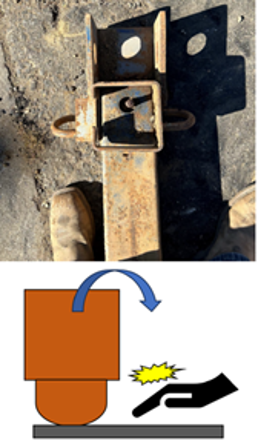
What went wrong?
The crew were manually handling the steel frames rather than using tools to do the job and so keeping hands and fingers out of the line of fire.
What are the lessons
- When dismantling large pieces of equipment, make sure every single piece is secure from sudden movement before it comes apart.
- Use correct lifting tools rather than hands, and so keep out of pinch points and the line of fire.
- Ensure familiarity with loads and equipment being handled before starting: this may be particularly true for third-party or rented equipment.
Members may wish to refer to
Related Safety Flashes
-
IMCA SF 05/23
16 February 2023
-
-
IMCA SF 17/23
13 July 2023
-
-
IMCA SF 28/23
6 December 2023
-
IMCA Safety Flashes summarise key safety matters and incidents, allowing lessons to be more easily learnt for the benefit of the entire offshore industry.
The effectiveness of the IMCA Safety Flash system depends on the industry sharing information and so avoiding repeat incidents. Incidents are classified according to IOGP's Life Saving Rules.
All information is anonymised or sanitised, as appropriate, and warnings for graphic content included where possible.
IMCA makes every effort to ensure both the accuracy and reliability of the information shared, but is not be liable for any guidance and/or recommendation and/or statement herein contained.
The information contained in this document does not fulfil or replace any individual's or Member's legal, regulatory or other duties or obligations in respect of their operations. Individuals and Members remain solely responsible for the safe, lawful and proper conduct of their operations.
Share your safety incidents with IMCA online. Sign-up to receive Safety Flashes straight to your email.