NTSB: Failure to disconnect and secure vehicle batteries led to fire
- Safety Flash
- Published on 10 February 2022
- Generated on 18 October 2026
- IMCA SF 04/22
- 2 minute read
The National Transportation Safety Board of the United States (NTSB) has published a report into a fire aboard a vehicle carrier that resulted in $40 million worth of damage. See here for details. Whilst this event did not occur on a vessel involved in marine construction, the learnings and implications are applicable to IMCA Members’ operations.
What happened?
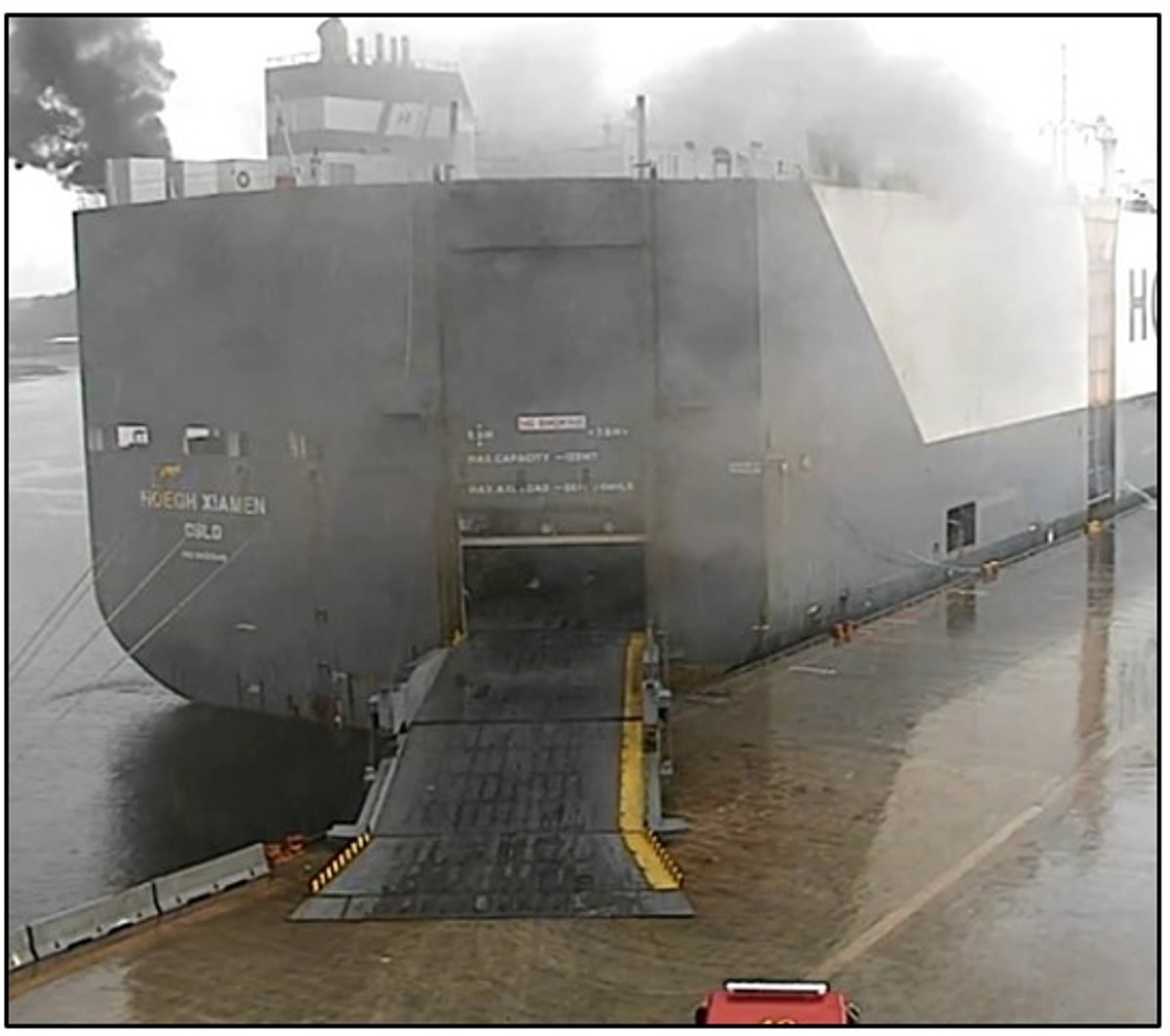
An electrical fault from an improperly disconnected battery in a used vehicle led to a fire aboard the vehicle carrier Höegh Xiamen at Jacksonville, Fl., in June 2020. Nine firefighters were injured tackling the blaze, which took over a week to put out. The vessel and its entire cargo (over two thousand used cars) were effectively destroyed.
What went wrong?
- Many of the vehicles loaded had batteries that were not disconnected and secured in accordance with procedures, which increased the risk of electrical arcing and component faults. During loading operations, both the loading personnel and crew missed opportunities to address these hazards.
- Detection of the fire was delayed because the vessels’ fire detection systems had not yet been reactivated after loading was completed.
- The local fire department’s response to the accident was delayed because the Master did not immediately have available contact information for search and rescue authorities.
- The Master did not know how to report a fire to local authorities.
What was the cause?
The NTSB determined the probable cause of the fire was ineffective oversight of the loading crew, which did not identify that the charterer’s vehicle battery securement procedures were not being followed. This resulted in an electrical fault from an improperly disconnected battery in a used vehicle;
Contributing to the delay in the detection of the fire was the crew not immediately reactivating the vessel’s fire detection system after the completion of loading. Contributing to the extent of the fire was the Master’s decision to delay the release of the carbon dioxide fixed fire extinguishing system.
Actions (in summary)
- Improved oversight and training of personnel involved in loading and in dealing with batteries and potentially hazardous cargo.
- Revision of procedures for the reactivation of fire detection systems after loading.
- Ensuring emergency contact information is immediately available for bridge teams.
Related Safety Flashes
-
IMCA SF 29/21
28 October 2021
IMCA Safety Flashes summarise key safety matters and incidents, allowing lessons to be more easily learnt for the benefit of the entire offshore industry.
The effectiveness of the IMCA Safety Flash system depends on the industry sharing information and so avoiding repeat incidents. Incidents are classified according to IOGP's Life Saving Rules.
All information is anonymised or sanitised, as appropriate, and warnings for graphic content included where possible.
IMCA makes every effort to ensure both the accuracy and reliability of the information shared, but is not be liable for any guidance and/or recommendation and/or statement herein contained.
The information contained in this document does not fulfil or replace any individual's or Member's legal, regulatory or other duties or obligations in respect of their operations. Individuals and Members remain solely responsible for the safe, lawful and proper conduct of their operations.
Share your safety incidents with IMCA online. Sign-up to receive Safety Flashes straight to your email.