Saturation diver exposed to chemicals from pipeline
- Safety Flash
- Published on 6 February 2025
- Generated on 25 October 2026
- IMCA SF 02/25
- 2 minute read
During pigging and decommissioning operations, a saturation diver was exposed to the contents of a pipeline, which was chemically treated seawater.
What happened?
The incident occurred during a bell run to disconnect a 5cm pigging/flushing hose. During the disconnect process, the diver became exposed to the contents of the pipeline. The diver noted discomfort to exposed areas of the wrists and arms and was recalled to the bell. At the bell, the affected areas were cleaned with a mild soap. The divers’ suit and gear were removed and stored on the outside of the bell. The bell run was terminated, and the divers returned to the chamber complex for evaluation and monitoring. In the chamber the diver thoroughly washed with soap and cool water, and applied burn cream to the affected areas.
Subsequently the diver noted light scabs forming on the left forearm and light blisters on the right, and burn cream was applied. The divers went onto decompression shortly afterwards as the job was over. The company Diving Medical Officer diagnosed first degree chemical burns to the neck and second degree chemical burns to both forearms. The diver was in due course cleared to return to assigned duties.
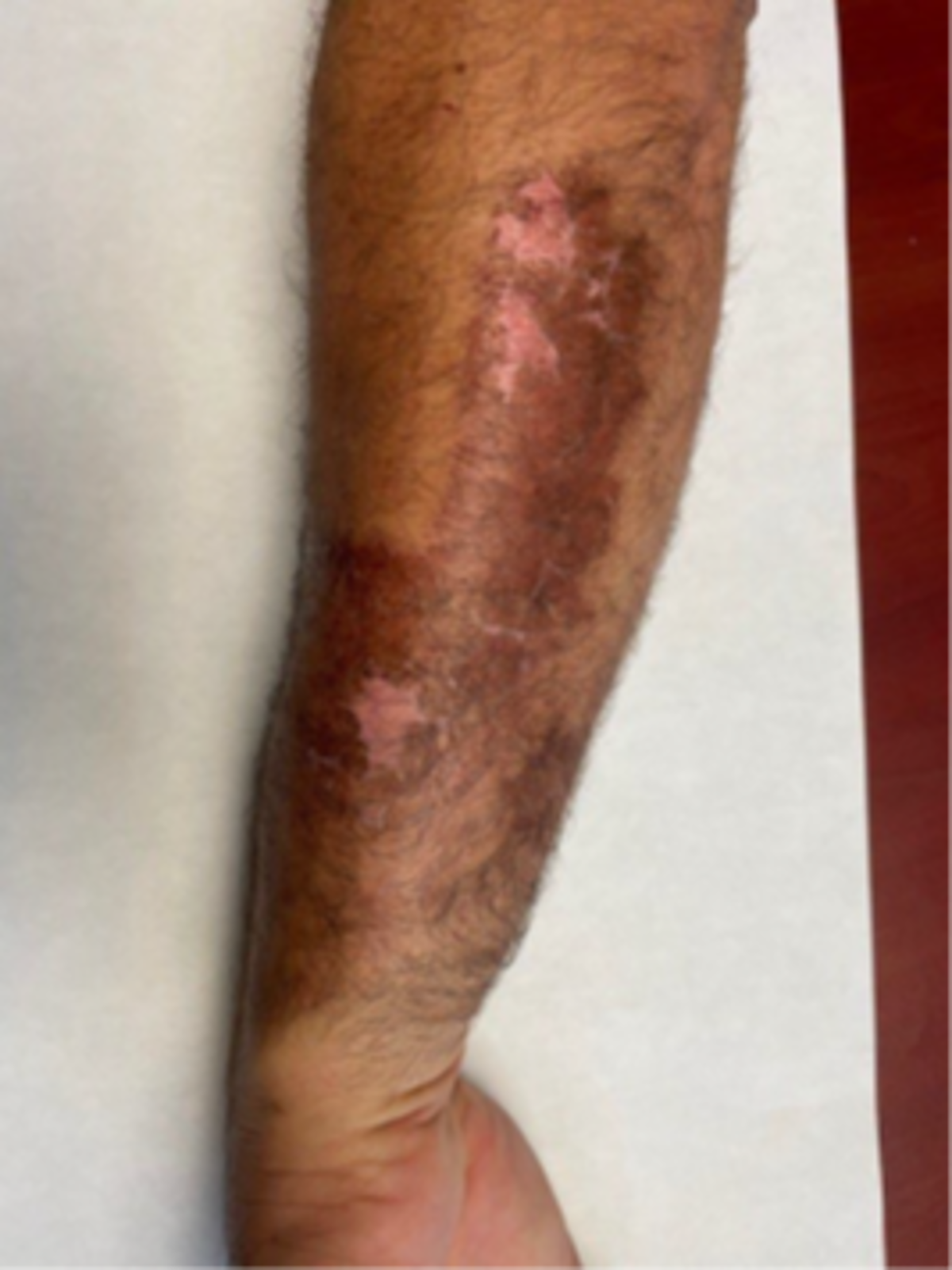
Chemical burns on forearm
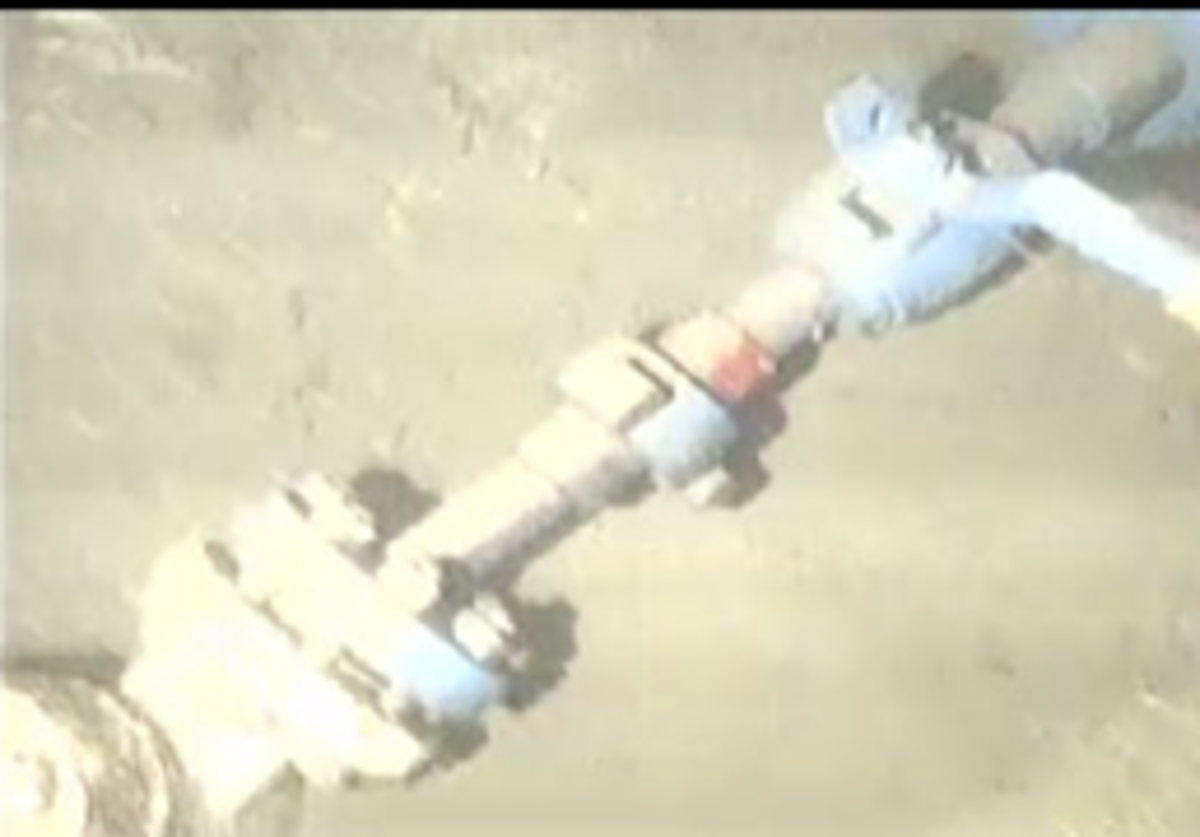
Divers video capture of worksite
What went wrong?
- There was a lack of communication as to whether or not the line being handled by the divers had been flushed
- There were no engineered barriers in place to prevent the divers from coming into contact with hazardous substances from the pipes.
Lessons learned
- Identify all risks and include them in the Hazard Identification and Risk Analysis. In this case “it was thought” that the lines being handled had been flushed.
- Ensure there us a full understanding of pipeline contents before flushing operations.
- Amended procedures for operation to include:
̶ warnings conveying possible contact with hazardous pipeline contents.
̶ steps to isolate valves regardless of pipeline contents.
- Use of barrier cream by workers during hose or pipeline disconnect operations for any pipeline operation.
- Upstream and downstream valves on flushing assemblies should be secured before disconnecting flushing equipment.
- Plan to minimize diver exposure to pipe or hose contents by addition of local valves.
Related Safety Flashes
-
IMCA SF 04/15
20 March 2015
-
IMCA SF 08/09
19 June 2009
-
IMCA SF 10/07
20 December 2007
IMCA Safety Flashes summarise key safety matters and incidents, allowing lessons to be more easily learnt for the benefit of the entire offshore industry.
The effectiveness of the IMCA Safety Flash system depends on the industry sharing information and so avoiding repeat incidents. Incidents are classified according to IOGP's Life Saving Rules.
All information is anonymised or sanitised, as appropriate, and warnings for graphic content included where possible.
IMCA makes every effort to ensure both the accuracy and reliability of the information shared, but is not be liable for any guidance and/or recommendation and/or statement herein contained.
The information contained in this document does not fulfil or replace any individual's or Member's legal, regulatory or other duties or obligations in respect of their operations. Individuals and Members remain solely responsible for the safe, lawful and proper conduct of their operations.
Share your safety incidents with IMCA online. Sign-up to receive Safety Flashes straight to your email.